Tired of Hiding Symptoms
but NEVER Healing?
Then It’s Time for Something NEW...
Something That Actually
Treats the ROOT Cause and
Activates RAPID Regeneration
So You Can FINALLY Get Your Life Back!
Tired of Hiding Symptoms but
NEVER Healing?
Then It’s Time for Something NEW...
Something That Actually Treats the ROOT Cause and
Activates RAPID Regeneration
So You Can FINALLY Get Your Life Back!
SEE WHAT MOST PEOPLE NEVER GET TOLD

Secure Your Spot for a FREE Live Session With Dr. D
That Answers ALL Your Questions
And Explains EVERYTHING You Need
To Get You Started on the Road to
RAPID HEALING
Secure Your Spot for
a FREE Live Session With Dr. D
That Answers
ALL Your Questions
And Explains EVERYTHING
You Need To Get You
Started on the Road to
RAPID HEALING
Next Live Session
July 20, 2026 at 6:00 PM ET
Live Online • Free to Attend
Can't attend live? Register anyway — we'll send you the replay.
THIS MAY BE YOU
When Did Pain Start Dictating Your Life?
• You wake up stiff.
• You avoid movements you used to enjoy.
• You carry NSAIDs “just in case.”
• You’ve been told to rest — but resting hasn’t fixed it.
Adapting to pain is not the same as resolving it.
And over time, it changes more than your body. It changes your life.

If This Sounds Familiar, You’re Not Alone.
Chronic musculoskeletal pain often develops quietly.
And for many of us, it becomes normal . . .
before it becomes unignorable.
You’ve quietly changed how you move to avoid triggering pain.
You can feel strength and mobility slipping year by year.
You get short bursts of relief, but the same issue keeps returning.
Pain has started affecting your sleep, energy, or mood.
You hesitate to train, play sports, or stay active because flare-ups are unpredictable.
You’re not sure what to trust because advice has been inconsistent.
Most of us learn to live with pain.
Very few are shown how to address what may be happening beneath it.
THE BIGGER PICTURE
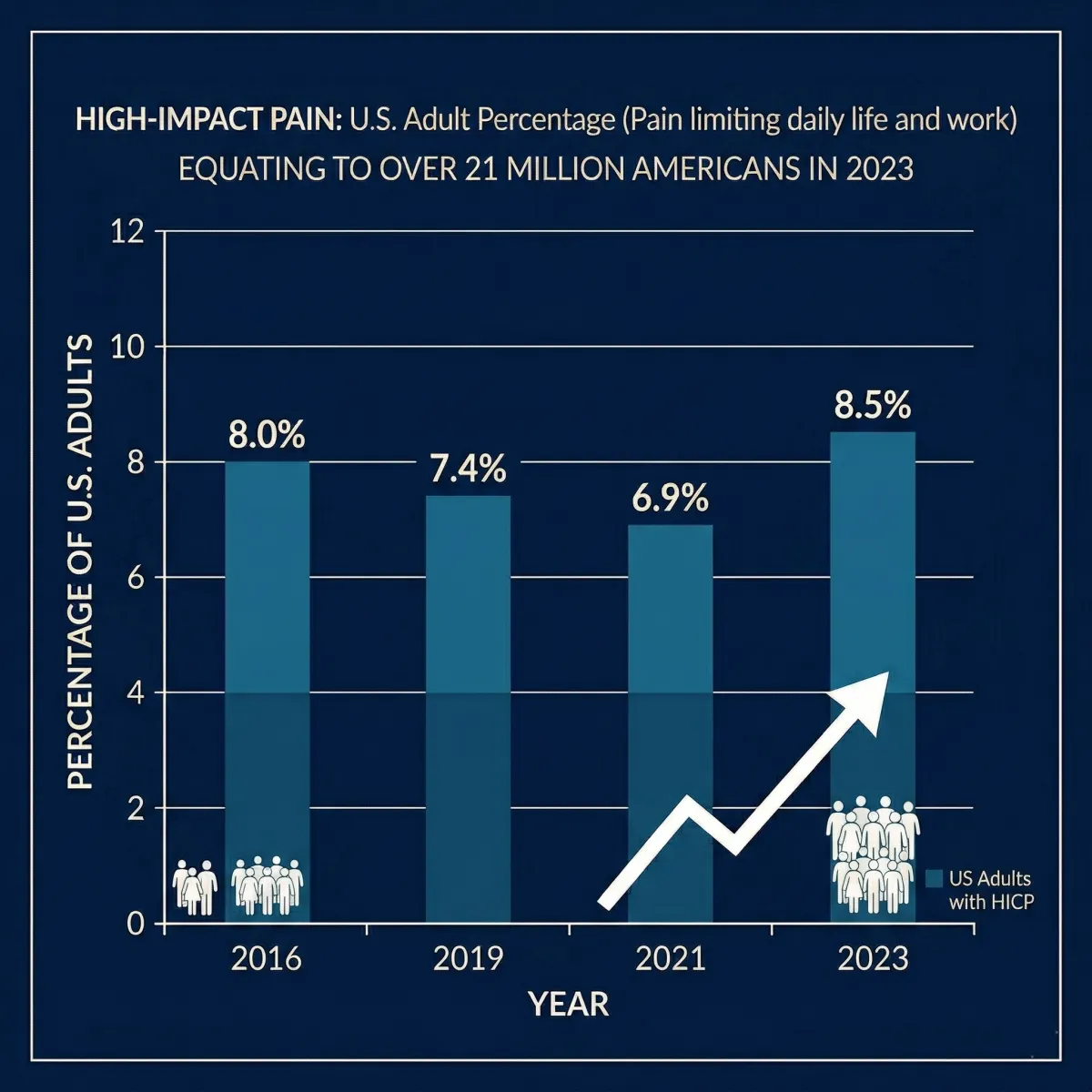
The Chronic Pain Crisis
Chronic pain is common. But what’s often missing is a clear explanation of why it persists and why it keeps returning.
• 1 in 4 people live with chronic pain.
• Chronic pain disrupts sleep in up to 80% of sufferers.
• Low back pain is the leading cause of disability worldwide.
• Long-term NSAID use carries measurable cardiovascular risk.
• Chronic pain affects a massive portion of adults and is one of the leading reasons people lose mobility.
Yet, most plans still focus on managing inflammation and symptoms, rather than restoring the underlying issue.
THE BIGGER PICTURE
The Chronic Pain Crisis!
Chronic pain is common. But what’s often missing is a clear explanation of why it persists and why
it keeps returning.
• 1 in 4 people live with chronic pain.
• Chronic pain disrupts sleep in up to 80% of sufferers.
• Low back pain is the leading cause of disability worldwide.
• Long-term NSAID use carries measurable cardiovascular risk.
• Chronic pain affects a massive portion of adults and is one of the leading reasons people lose mobility.
Yet, most plans still focus on managing inflammation and symptoms, rather than restoring
the underlying issue.
THE PROBLEM WITH SYMPTOM RELIEF
THE PROBLEM WITH
SYMPTOM RELIEF
Why Conventional Treatments Fail
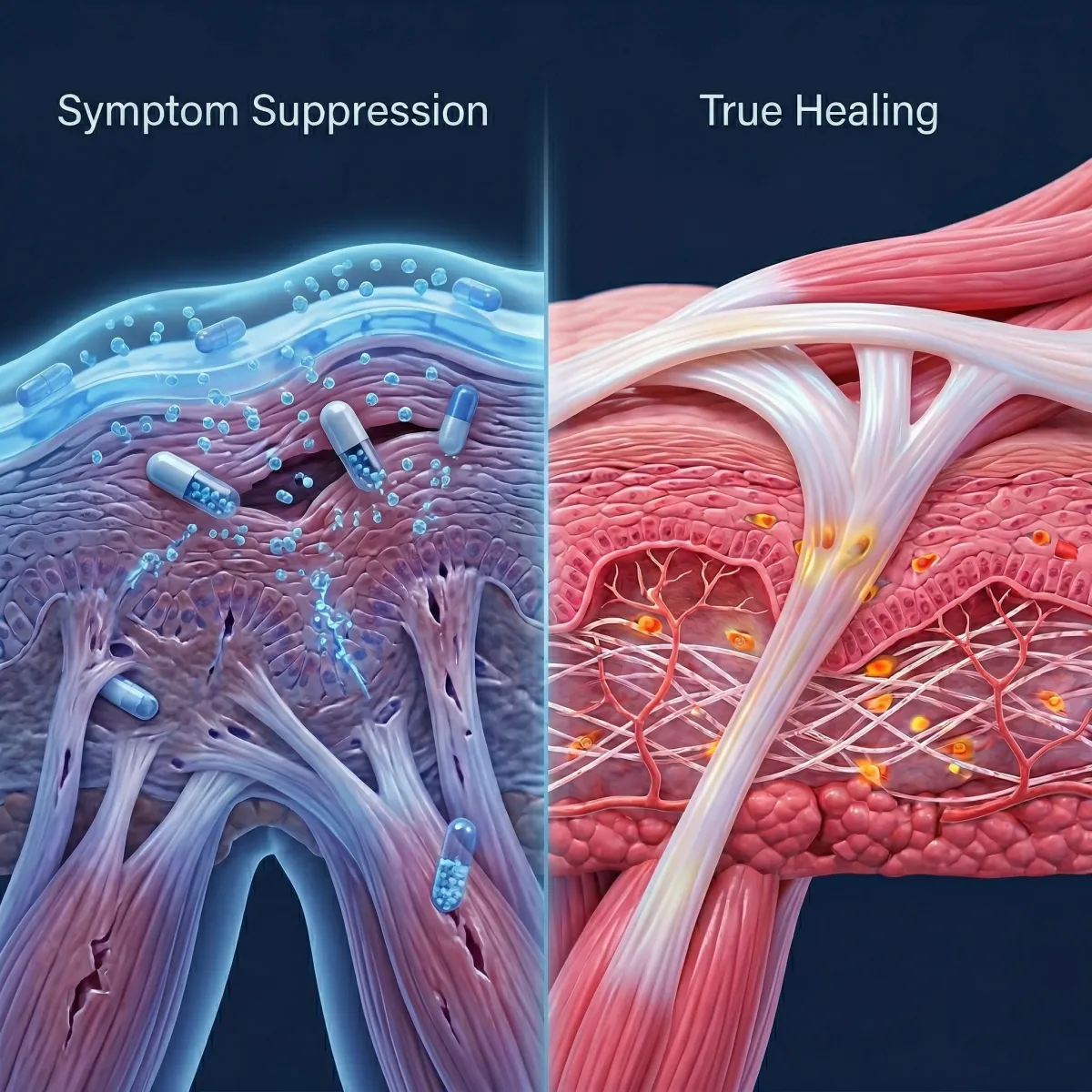
Most conventional treatments like steroid injections, anti-inflammatory drugs, and sometimes even surgery, are not designed to address root causes. Their primary purpose is symptom suppression.
But that’s like turning off your vehicle’s oil light instead of refilling or replacing the oil. And true healing never happens.
BEYOND SYMPTOM RELIEF
Stem Cells Are the Intelligent Choice
It’s time to stop hiding symptoms and start the healing process. And nothing on Earth has been shown to achieve this better than stem cells.
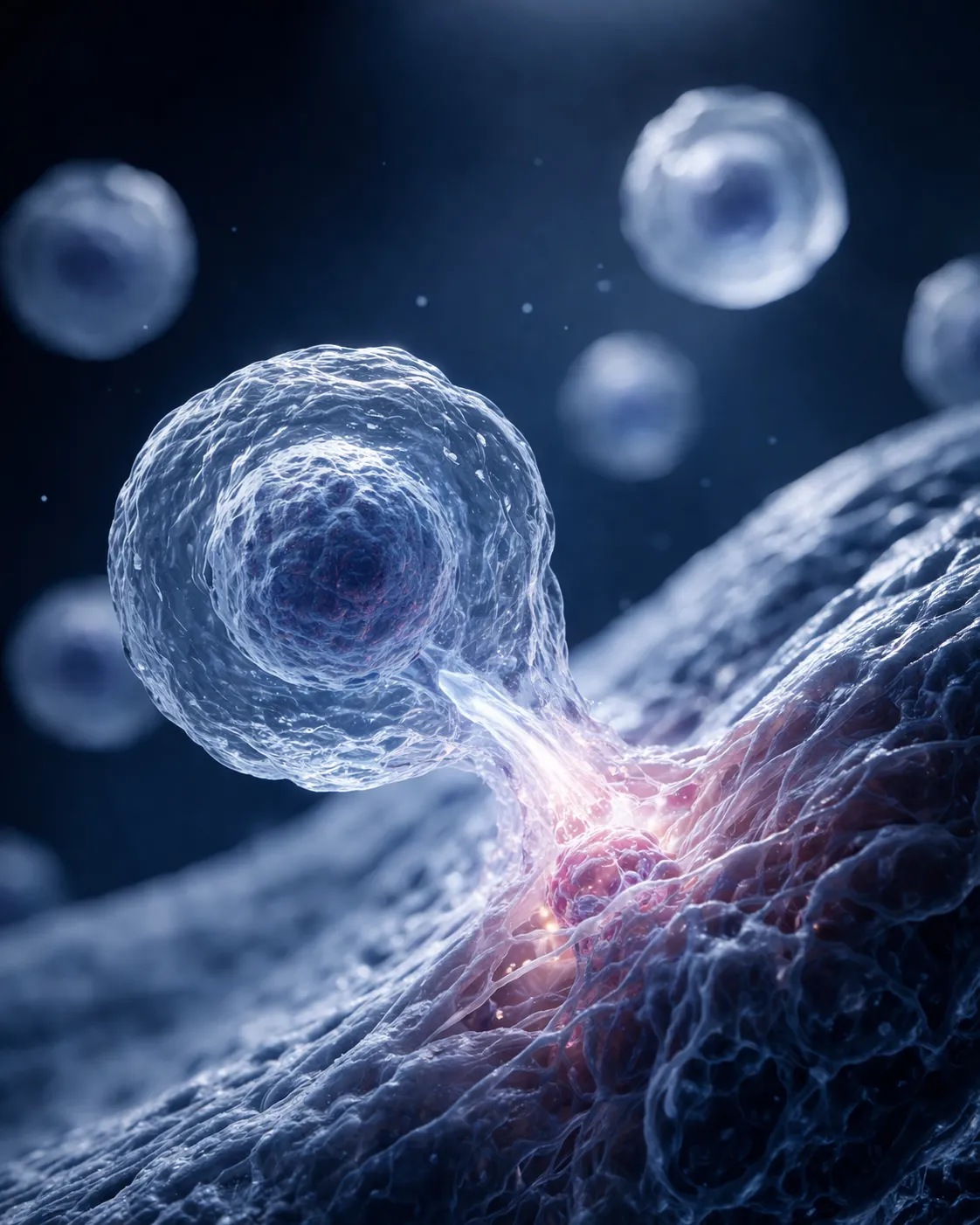
Unlike most conventional treatments, stem cells activate true biological repair.
• Instead of numbing inflammation → they regulate it.
• Instead of cutting tissue out → they stimulate regeneration.
• Instead of temporary relief → they aim for functional restoration.
THIS IS THE KEY DISTINCTION
What Makes Stem Cells So Special?
In order to understand how effective and life-changing stem cells are as a regenerative treatment, it really helps to have a basic understanding of what makes them so different.
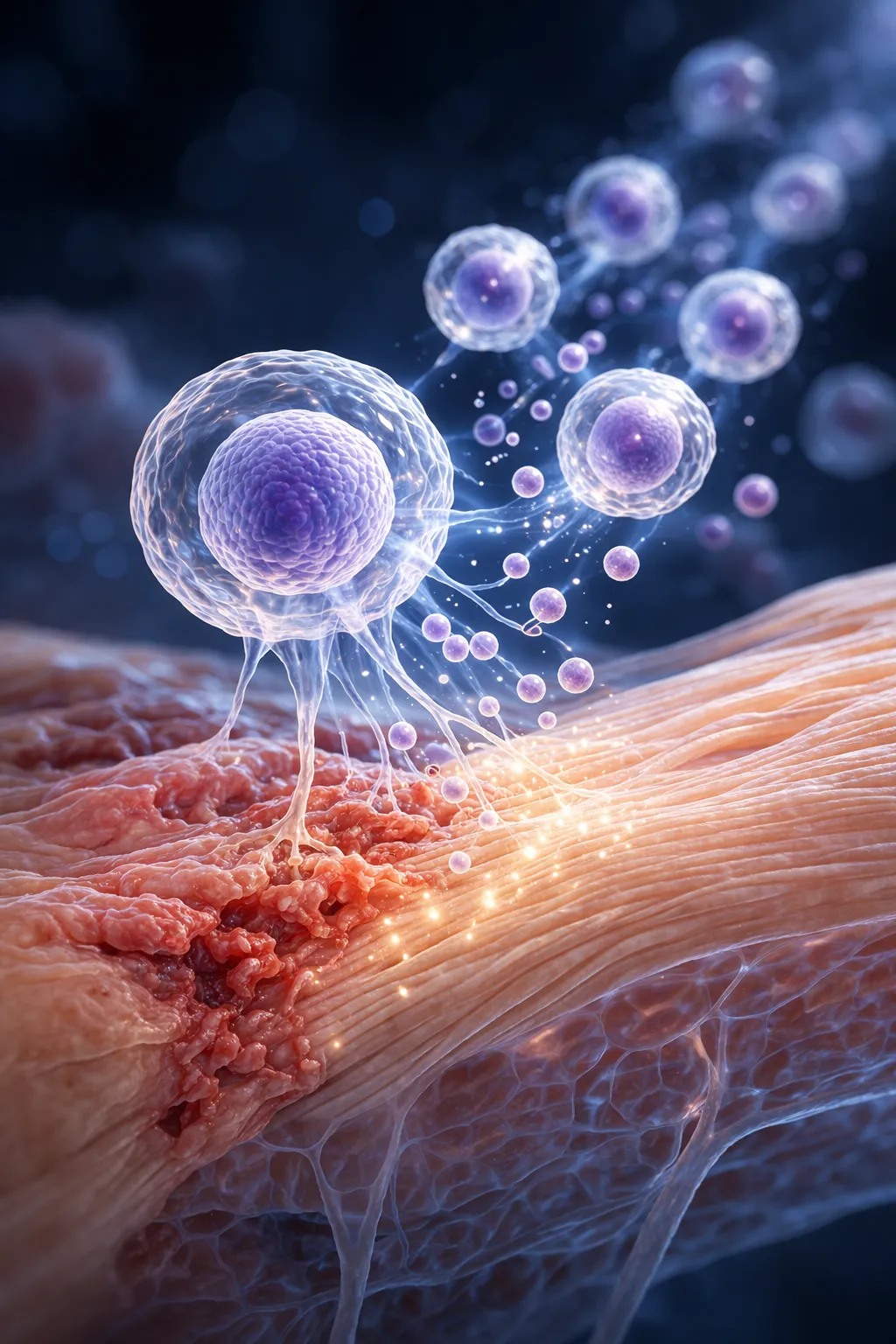
Stem cells are not like other cells that are limited to a specific, specialized role. Stem cells are functionally blank cells with no specialized role until they are needed.
Once they’re needed, stem cells have two absolutely incredible capabilities that can help heal injuries like yours:
1. Stem cells can transform themselves into different types of cells, which is important for different types of tissue repair.
2. They can replicate themselves, which makes stem cells force multipliers for areas of the body that need more raw material.
On top of all this, stem cells also reduce inflammation, stimulate collagen production, recruit your body’s own repair cells, and help reset the biological surroundings of that tissue.
In short, stem cells can be considered your body’s
greatest repair mechanisms.
On top of all this, stem cells also reduce inflammation, stimulate collagen production, recruit your body’s own repair cells, and
help reset the biological
surroundings of that tissue.
In short, stem cells can be
considered your body’s
greatest repair mechanisms.
WHAT SETS STEM CELLS APART
Not All Stem Cells Are the Same: Choose Wisely
Not All Stem Cells
Are the Same:
Choose Wisely
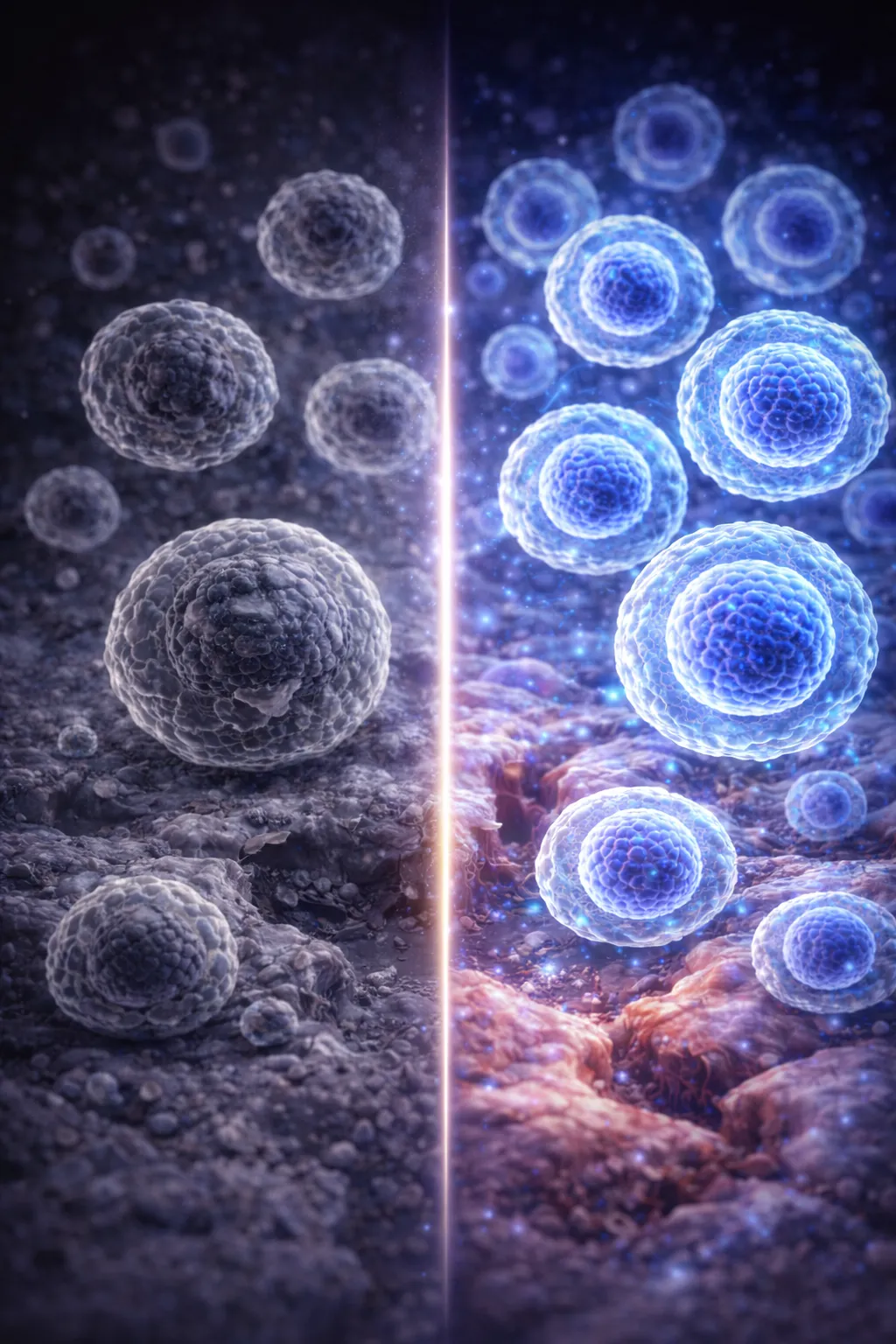
But you may have heard some mixed reviews on stem cells. And that’s because there are different types of stem cells derived from different tissues, and which of these stem cells you use will determine their effectiveness.
This is very important because you don’t want to waste your money on the wrong type of stem cells.
Why Your Own Stem Cells Are Not the Best Choice
Let’s briefly explain which stem cells are not the best choice and why. We’re talking about your stem cells.
Adult Stem Cells Come from Fat or Bones (Not Ideal)
These are either fat-derived stem cells or bone marrow-derived stem cells. Simply put, these stem cells exist in your fat and bones.
And the reason why your stem cells from either your fat or bone are not ideal is because, how shall we put this delicately, you’re a more... seasoned individual. You’re old. But in a good way, like fine wine!
But guess what types of stem cells are used for most treatments? Yup.
Now, don’t get us wrong. If these stem cells were worthless, no one would be using them. They do offer benefits that are better than conventional treatments.
Your Stem Cells Have Been Exposed to a Lifetime of Cellular Wear and Tear
But, depending on the age of the individual, whether this person smokes, if there are any diseases or health conditions, and how much wear and tear and cellular damage that person has accumulated over the years, will determine how robust those stem cells are.
THE SOURCE MATTERS MOST
What Are the Most Powerful and Most Proven Stem Cells?
So, here’s the good news: There is a type of stem cell that is derived from the perfect source that’s free of illness, disease, inflammation, and age. And it comes from a healthy tissue that’s normally disposed of every time a mother gives birth to a healthy infant.
Introducing Wharton’s Jelly-Derived Stem Cells
We are talking about a unique substance found in the umbilical cord known as Wharton’s jelly.
Here’s why these particular stem cells are second to none:
• Wharton’s jelly-derived stem cells are biologically ‘age zero.’ Meaning, they have never been exposed to the abuses of daily adult life.
• They have stronger regenerative capabilities than adult cells.
• These stem cells have a higher concentration and a higher number of cells
• Wharton’s jelly stem cells have natural anti-rejection properties so that they can be safely accepted by the body.
In short, Wharton’s jelly-derived stem cells are the best of the best of the best. And that is the only kind we use for our patients.

CARE THAT COMES TO YOU
Treatment in Your Home, White-Glove Service
Treatment in
Your Home,
White-Glove Service
The best part about our treatments is that we offer them at our patients' homes.
Although we do have a Tallahassee clinic, we know that not everyone lives close enough to receive treatment there.
So, we have solved that dilemma by bringing the treatment to you! And right now, we service the entire state of Florida.
What You’ll Learn
in this Process
What You’ll Learn in this Process
This live session and the consultation process are designed to give
you clarity and a structured way to think about recovery, not pressure.
Why pain keeps returning even after rest, therapy, or injections
What “degeneration” can look like even when imaging seems normal
The difference between symptom control and tissue repair
How regenerative signaling and circulation relate to recovery
What a structured plan looks like and what to avoid
What the next steps look like if you want personalized help
Get the clarity you need before taking the next step.
Get the clarity you need before
taking the next step.
What We Focus On Instead
What We Focus
On Instead
Instead of masking symptoms, we focus on three interconnected
pillars that support musculoskeletal regeneration.
Instead of masking symptoms, we focus on
three interconnected pillars
that support musculoskeletal regeneration.
1. Restoring Circulation & Regenerative Signaling
Chronic pain is often associated with tissues impacted by reduced blood flow, degenerated scar tissue, and impaired mobility. Stem cells are used to improve circulation, trigger cellular signaling, and restore targeted areas.
2. Supporting Structural Repair
Tendons and ligaments, once sufficiently injured, often remain in a chronically degenerated state. Contrary to popular belief, steroids and non-steroidal anti-inflammatory drugs (NSAIDs) have been shown to contribute to that degeneration. Stem cells do not operate by the same symptom-suppressive mechanisms. Instead, they reactivate the regenerative engine so that true healing can finally occur.
3. Build a Recovery-Supportive Environment
Healing does not occur in isolation. Corrective exercise, targeted nutrition, and sleep optimization all help to create the internal conditions necessary for tissue repair. We make it a point to provide useful lifestyle tips and guidelines that can help to optimize the effects of the treatment.
These pillars are integrated into one clinical framework,
not used as standalone fixes.
These pillars are integrated into
one clinical framework,
not used as standalone fixes.
This Session Is For Men and Women Who:
Have joint or tendon pain that keeps returning.
Refuse to accept declining mobility as “normal aging.”
Want to understand the root cause — not just suppress symptoms.
Prefer structured medical guidance over guesswork.
Intend to stay active and physically capable for years to come.
Have responsibilities and cannot afford extended downtime.
Value disciplined recovery over temporary relief.
Expect transparency and clarity before making decisions.
Are ready to take ownership of their long-term health.
THIS Live session and consultation are NOT FOR MEN AND WOMEN LOOKING
FOR A QUICK FIX TO SHUT DOWN SYMPTOMS AND MANAGE LIFELONG LIMITATIONS
If You Decide to Move Forward,
Here’s the Clinical Path
In this FREE live session, we explain this pathway
CLEARLY so you understand EVERY step before making ANY decision.
Step 1
The Educational Session
You learn how regenerative care works, what candidacy looks like, and whether this approach aligns with your condition.
Step 2
The Personalized Evaluation
If appropriate, we review your history, assess the affected area, and develop a structured plan tailored to your condition.
Step 3
Initiate Your Program
When you’re ready to begin, we secure your place in the program and start your personalized protocol with ongoing monitoring and adjustments.
Clarity comes first. Commitment comes second.
Results follow the structure.
DON’T DELAY
The Sooner You Address Degeneration,
The Better the Outcome.
Chronically degenerative musculoskeletal tissue rarely heals on its own.
The longer the degeneration persists, the more difficult recovery can become.
Learn what your options are before the problem progresses further.
WHO YOU’LL LEARN FROM
Meet Your Regenerative-Support Team
Medical clarity plus disciplined execution under one framework.
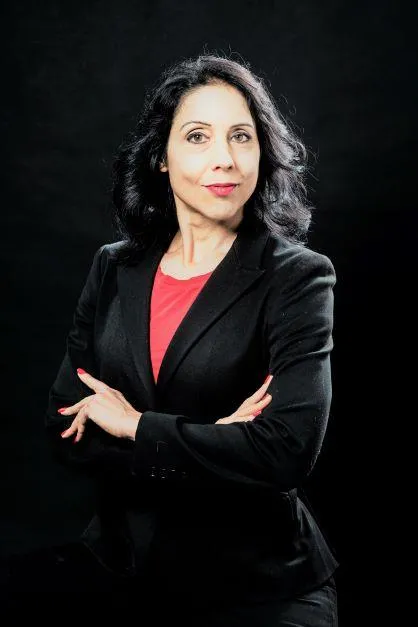
CATHERINE DIVINGIAN
(“DR. D”), MD, PhD
Chief Executive Officer and
Chief Medical Officer
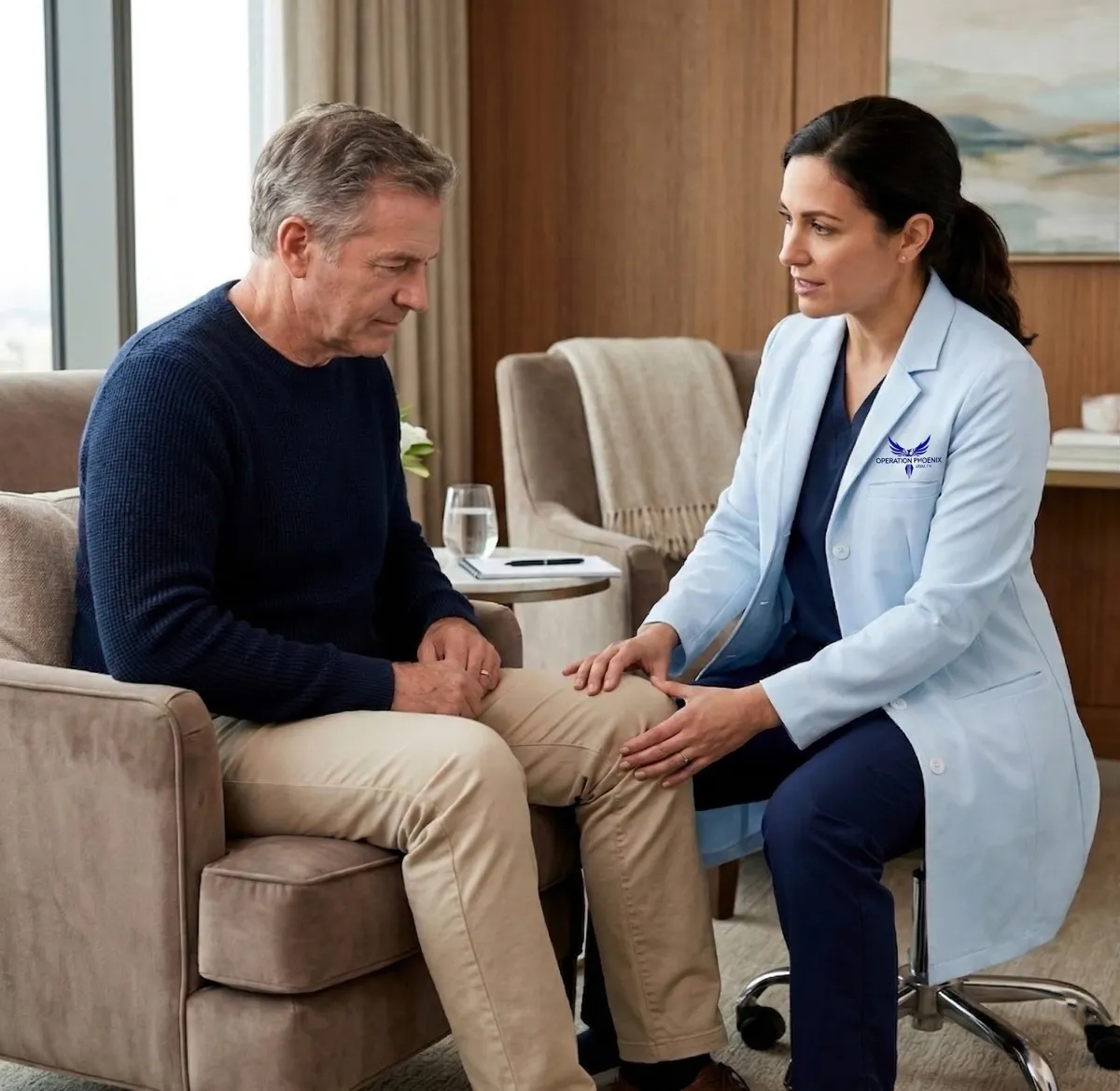
Dr. Catherine Divingian, who often goes by “Dr. D,” has an extensive background in internal, emergency, and regenerative medicine. With decades of experience and research in pharmaceutical science, she leads the medical strategy behind Operation Phoenix Health.
Dr. D not only provides the clinical expertise behind our regenerative medical treatments, but she is also the driving force behind the white-glove service we provide for our patients. Her focus is clear: identify what may be driving chronic musculoskeletal pain and map out the most structured and results-driven path possible.
Licensed physician (MD), Internal and Emergency Medicine
University Professor and Research Scientist
PhD in Health Psychology
MS in Pharmaceutical Sciences
ISSA-Certified Sports Nutritionist
ISSA-Certified Corrective Exercise Specialist
NSCA-Certified Tactical Strength and Conditioning Facilitator
Formerly US Navy, Medical Service Corps; Formerly US Army Reserve, Army Medical Corps
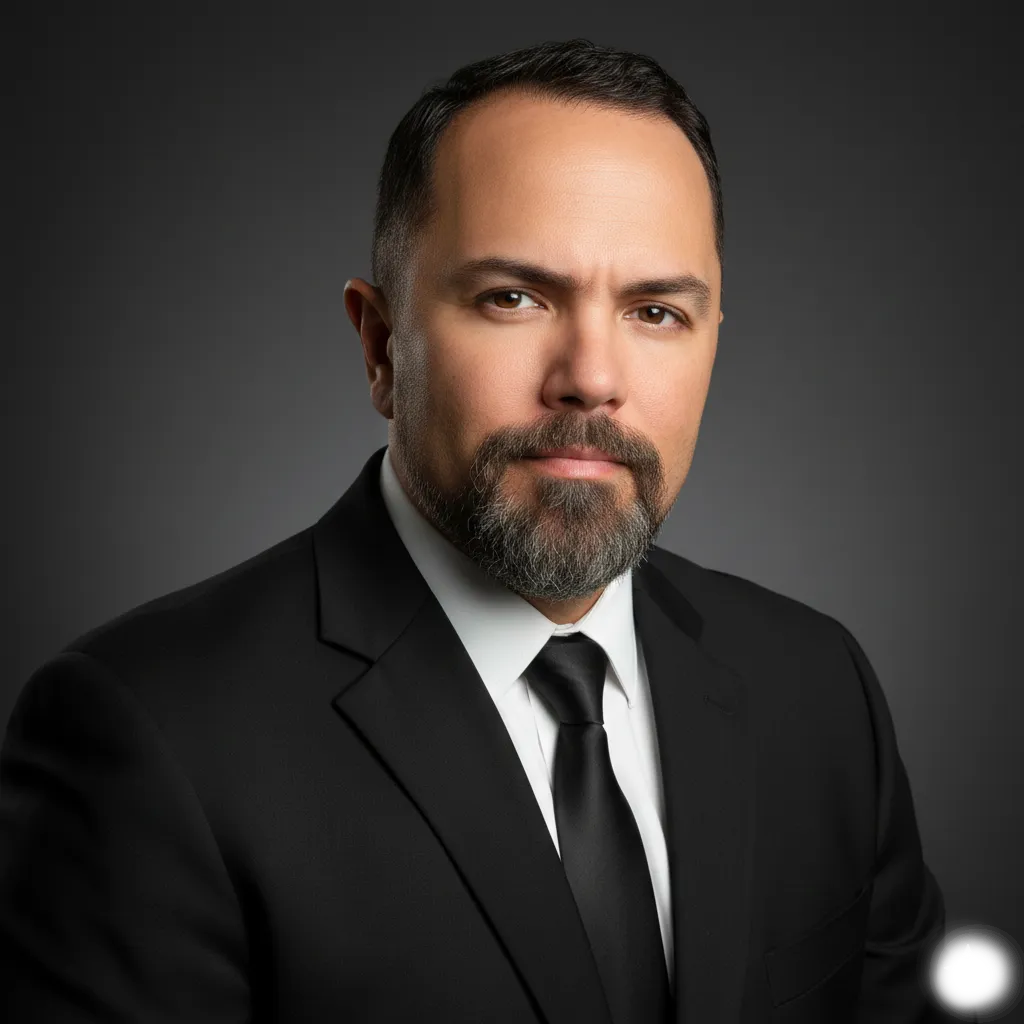
DARIUS CREED
Chief Educational Advisor
A former Fleet Marine Force (FMF) Hospital Corpsman (infantry medic), Creed has over 14 years of training and experience in military trauma field medicine. He has also been a strength and conditioning trainer and peak-performance coach for more than two decades.
Creed has devoted most of his life to investigating the multifaceted domain of human potential, where he combined his research in health science and regenerative biologics into a unified discipline that is now being leveraged towards education, communication, and transformation.
These actionable outcomes, both for our company and our patients, are his primary motivations behind his role in Operation Phoenix Health.
Bachelor of Science in Health Science (Summa Cum Laude)
Master of Science in Sport (Performance) Psychology
NSCA-Certified Tactical Strength and Conditioning Facilitator
US Army National Guard, Infantry (Formerly US Navy, Hospital Corps)
Frequently Asked Questions
Here are the most common questions before joining the session.
Here are the
most common questions
before joining the session.
1. Is this free live session with Dr. D is a sales presentation?
No. This is an educational event designed to explain why chronic musculoskeletal pain often persists and what a structured regenerative approach using Wharton’s jelly-derived stem cells can look like. If you want personalized help afterward, we will explain what the next step would be. However, there is never any obligation.
2. Who is this session for?
Men and women dealing with recurring joint, tendon, or soft tissue pain who want a clear medical explanation of how Wharton’s jelly-derived stem cells may be useful as a possible regenerative treatment.
3. What if my imaging looks normal?
That is more common than most people realize. Imaging does not always reflect tissue quality, circulation changes, or the functional drivers of pain. In the session, we explain what degeneration can look like and how it can be evaluated more clearly.
4. What conditions do you typically help with?
Our treatments primarily address chronic musculoskeletal and soft tissue aches and pains, such as those related to the knee, shoulder, back, hip, elbow, Achilles tendon, and plantar region.
5. How long does it take to see improvement?
Every person is different, and outcomes depend on factors like tissue quality, pre-existing conditions, and lifestyle behaviors. However, When it comes to most stem cell treatments, the average span of time for healing peaks at the three-month mark and continues up to 6 months and beyond. Keep in mind, some patients have reported some degree of relief as soon as the first three to four weeks.
6. What happens after I register for the session?
After the session, if you feel this approach may be right for you, you can request a free consultation with our care team. From there, they can learn more about your situation, answer your questions, and help determine the most appropriate next step.
7. Is there any obligation after I request a consultation call?
No. The purpose of the consultation is to provide clarity. If you decide you want help, we will explain the next step clearly. If not, you will still leave with a better understanding of what may be driving the problem.
8. Is this only for athletes?
No. This free live session and consultation are for any man or woman who wants to stay active and capable for the long term, whether you train regularly or simply want to move freely without pain and limitation.
TESTIMONIALS
What others are saying
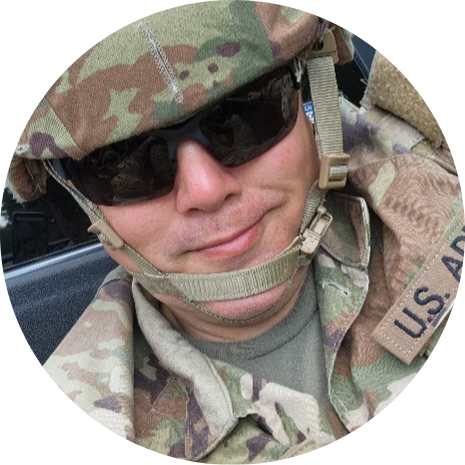
Having served in the military, I know what it’s like to go through injuries and rehab. And I know how ineffective NSAIDs and conventional medical advice can be when it comes to real healing. After months of getting nowhere, these stem cells finally got me results. I can assure you that these powerful treatments are unlike anything you will ever experience. And Dr. D and her clinical team are unlike any providers you will ever have. Highly recommended.
I can tell you that these stem cells and exosomes work. Within the first month, I experienced a significant improvement in my right shoulder. And when I followed up with ultrasound scans, we uncovered a significant improvement in the full-thickness supraspinatus tear I had after that first treatment. And just days after my second treatment to my knee, I went from not much more than 90-degree knee bends to nearly sitting on my heels—something I haven't been able to do in years! I stand by these treatments and encourage you to experience true healing. Nothing else comes close.

READY TO GET CLARITY?
Click the Button Below and Reserve Your Seat for the Next Session
Join the live free session with Dr. D
to understand what may be driving recurring musculoskeletal pain
and what a structured regenerative path forward can look like.
Copyrights 2026 | Operation Phoenix Health | Terms & Conditions